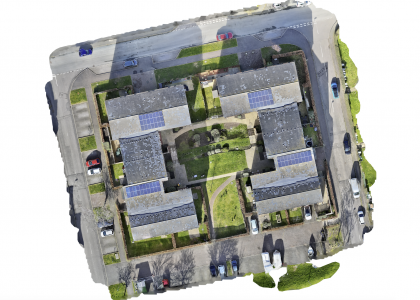

Inspections of all three twin blocks on the estate have been completed, revealing the real story of how identical properties age differently under identical conditions. Three buildings. Same construction methodology. Same building type. Yet the condition variance across three adjacent properties tells property managers everything they need to know to make strategic decisions about maintenance budgets, priorities, and asset preservation.
Using DJI Matrice 4T with high-resolution zoom, we captured every detail of each roof. Same drone. Same pilot. Same standards. Same methodology. The visual data is completely consistent across all three surveys, which means the differences documented are real differences in building condition, not variations in inspection quality.
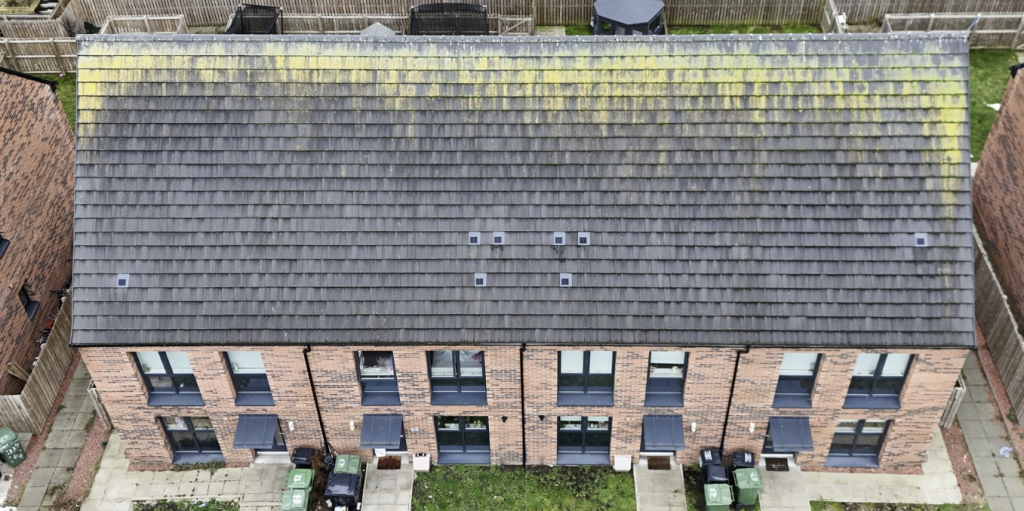
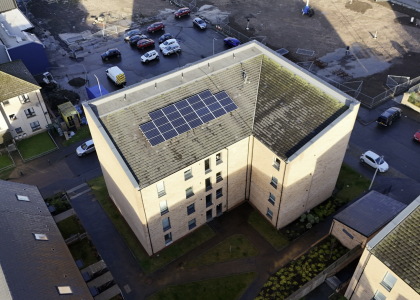
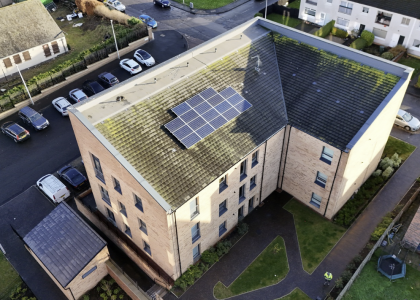
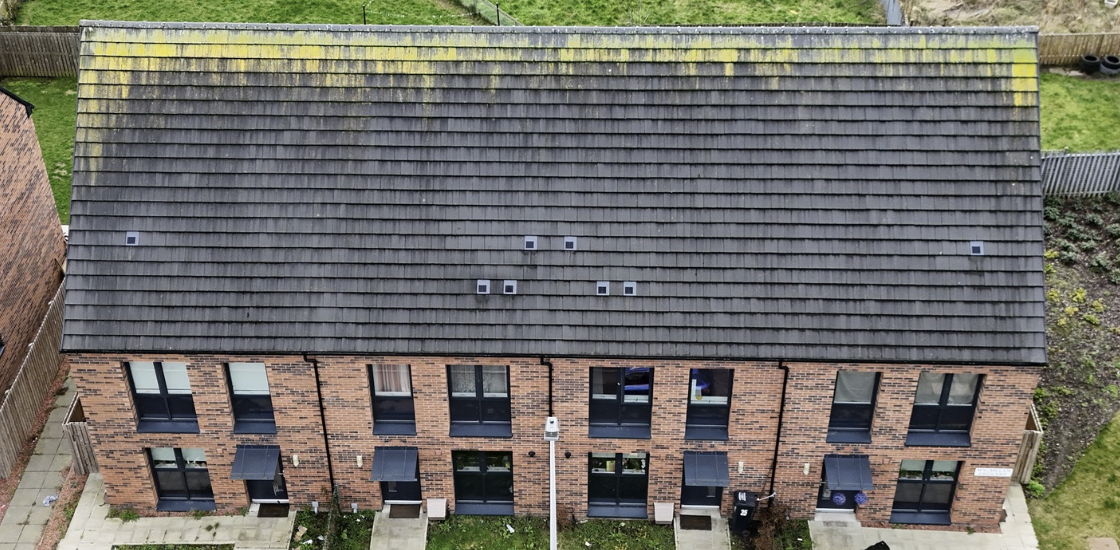
The first block shows significant deterioration zones across the roof surface. Aggressive biological growth covers substantial areas, with heavy yellow-green moss and lichen accumulation visible across multiple sections. The tile condition shows clear weathering patterns with advanced discoloration and surface degradation. Drainage pathways are compromised where biological growth has accumulated, preventing water flow and creating conditions for further deterioration. This building requires aggressive intervention for immediate surface cleaning and establishing a maintenance schedule that prevents this level of accumulation from recurring.
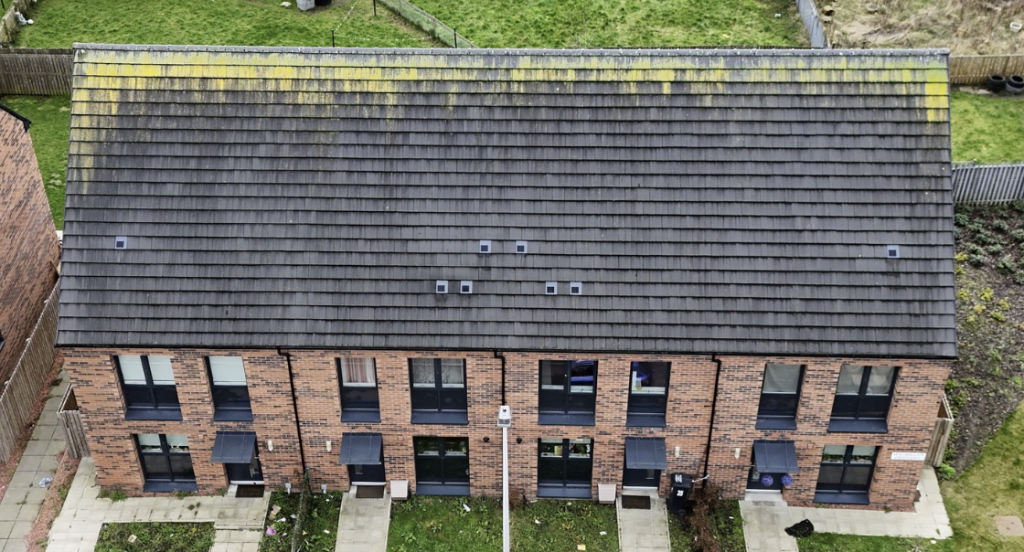
The second block presents a moderate overall condition. The roof surface shows some problem areas, but the biological load is manageable and the general structural integrity appears sound. Tile condition is reasonable in most areas, though some weathering is visible. Drainage appears functional in most locations, with only isolated areas showing compromised water flow. This is a stable asset that will continue to function well if current maintenance practices continue.
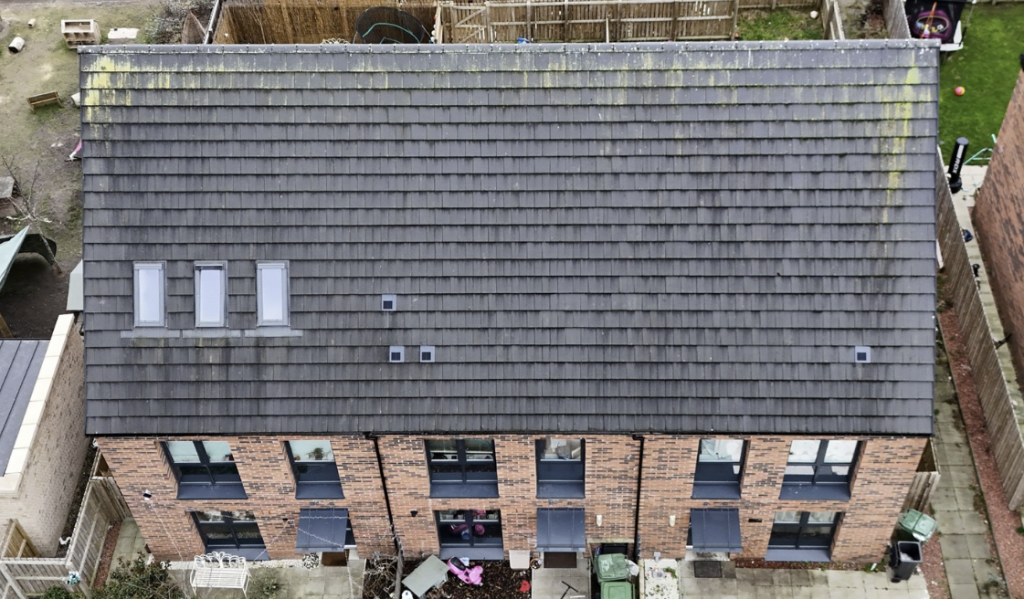
The third block demonstrates the best overall condition of the three. The roof surface is noticeably cleaner, with minimal biological load across the entire structure. Tile condition is well preserved, with less visible weathering than the other two buildings. Drainage pathways are clear and functional. This building is aging well. The evidence strongly suggests proactive maintenance practices have delivered superior results compared to the other two blocks.
What Three Buildings Teach You That One Never Could
Environmental exposure creates variation. The third block benefits from better drainage characteristics, less wind exposure, or better orientation. Maintenance history shows clearly in the roof condition. Some roofs have been better attended to, others neglected. The third block’s condition is direct evidence that proactive management delivers results.
Aging curves become predictable when you can see them. When you see how three identical assets age differently over the same period under similar conditions, you can forecast deterioration rates across your entire portfolio, model maintenance budgets, predict which buildings will require intervention at which times, and allocate resources strategically rather than reactively.
Trust in Execution comes from in-house delivery across all three properties. Same pilot. Same standards. Same methodology applied consistently. No variation from building to building. No inconsistencies that would create doubt about data quality.
Compliance with Standards means measurable data from each property. Tile condition assessment. Biological load evaluation. Drainage functionality. Deterioration zone identification. All documented consistently. All comparable. All defensible. This is the data you need to defend maintenance decisions against cost-cutting pressure.
Continuity of Baseline Monitoring establishes three permanent baselines. Every future inspection gets compared against all three. The property manager can now forecast maintenance budgets across the entire asset class and understand which buildings age faster, which hold up better, and the specific conditions that drive the difference.
By the end of this comparative inspection cycle, the property manager has more than three roof condition reports. They have a complete visual taxonomy of how this building type ages under different management practices and environmental conditions. They can see where problems accelerate and where good maintenance delivers measurable benefits.
This is how drone inspection scales from tactical roof surveys to strategic asset management. Single building inspections identify immediate problems. Comparative building inspections are strategic tools for understanding long-term asset behavior, forecasting maintenance needs across entire portfolios, and making confident decisions about resource allocation.
We’re delivering this level of strategic asset management across Robertson Partnership Homes and multiple other developments in Scotland. Every housing provider managing residential portfolios should ask: what are your three buildings teaching you that one survey never could?
If you’re responsible for residential property portfolios, if you manage multiple identical or similar building types, if you need to make data-driven decisions about maintenance budgets and priorities, let’s talk about what your buildings can teach you. Contact us today to discuss comparative asset management for your portfolio.