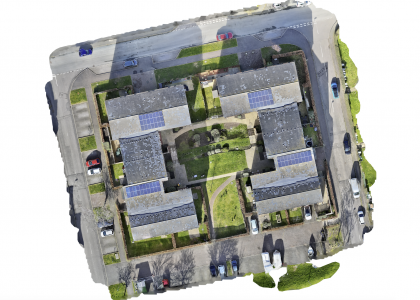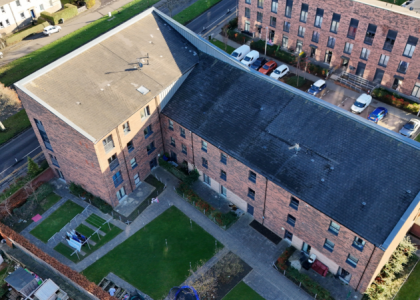

A recent roof inspection at a multi-storey residential property in Pennywell demonstrated how modern drone technology transforms the decision-making process for large-scale repair projects. Rather than the traditional approach — encasing the entire roof in scaffolding before making any repair decisions — our analysis enabled the property owner to reduce the scope of work by 30% and save a significant sum.
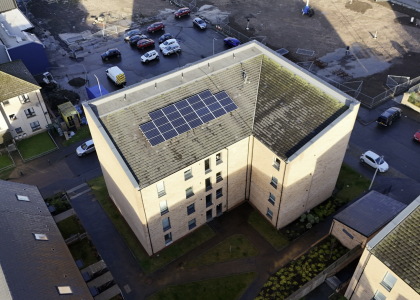
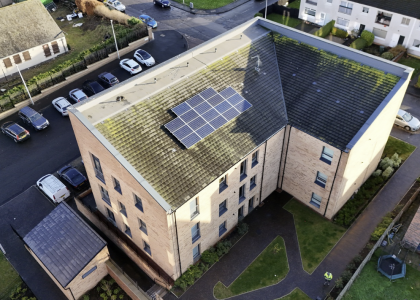
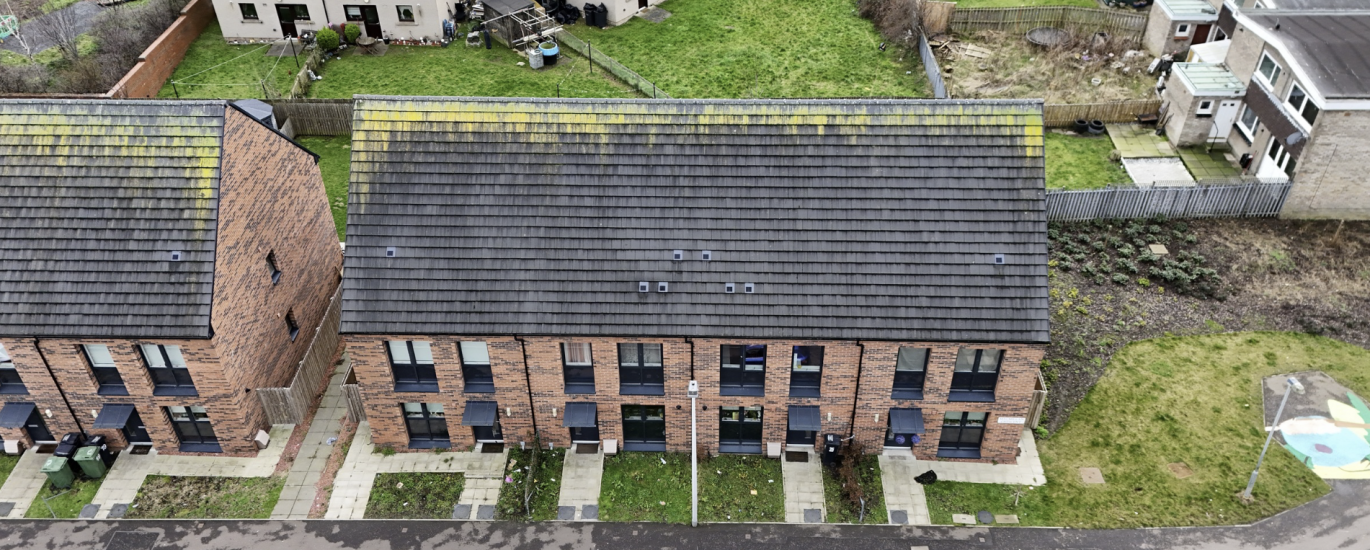
The building is typical of residential developments in Pennywell. A long, expansive roof running across multiple sections required detailed assessment of each segment. We observed distinct changes in tile coloration — from grey to yellowish-green tones — indicating material age and degree of degradation. Some sections showed obvious damage; others remained stable. But without precise evaluation of each area, any cost estimate would be guesswork.
Traditionally, this would mean sending workers onto scaffolding, restricting resident access, and hiring temporary structures before making any repair decisions. Additionally, Pennywell’s dense urban layout, power lines, and generally populated character limited logistical options. The cost of scaffolding alone would be substantial — regardless of whether it was needed across the entire surface or only part of it.
For this inspection, we deployed a DJI Matrice 4T equipped with optical zoom technology that proved critical. High-resolution zoom allowed us to capture tile details from a safe distance and altitude. Image stabilization ensured every frame was crystal clear, enabling precise damage assessment. We flew at a height well above the roof line of surrounding properties — this allowed us to avoid disturbing residents while maintaining full CAA compliance.
We executed this carefully. We approached closely only during detailed inspection of critical areas, always maintaining drone orientation and full control. These were responsible flights — not only technically, but ethically. Residents didn’t feel exposed, privacy wasn’t threatened, and simultaneously we gathered absolutely all data necessary.
Analysis allowed us to segment the roof into zones. We identified cracked and displaced tiles, moss and lichen buildup (indicating material age), and complete coverage gaps (fully degraded sections). The result was clear: 70% of the roof requires full scaffolding enclosure; 30% can be managed through alternative methods or deferred.
This zoning was a game-changer. Instead of contracting scaffolding across the entire roof surface, the client could focus on the highest-priority sections. This reduced estimated scaffolding rental costs by approximately 30% — without compromising repair quality or safety.
This isn’t magic. It’s professional assessment based on precise data. Every photograph was analyzed. Every section was classified. The owner now has concrete data for negotiating with contractors. He can plan repairs in phases. He can minimize disruption to residents. And he has a record for future decision-making — knowledge of how things change year to year.
Drone inspections may seem routine, but they demand regulatory knowledge, piloting skill, and professional ethics. At Diamondrone, we understand that every flight represents responsibility — to our clients and to the wider community. Flying high, we don’t disturb people. Delivering precise data, we save clients money. Building visual history, we prepare our clients for the future.
If you manage a property portfolio and need roof data you can defend — and act on — contact us. Diamondrone delivers drones with precision and accountability.